Smart home privacy risks have become a growing concern for people who simply wanted convenience. A voice assistant that answers questions instantly, a security camera that streams live footage to a phone, or a smart television that recommends content automatically can make daily life easier. Yet many homeowners never realize how much personal information these devices collect, store, and share behind the scenes.
The modern home is increasingly connected. Smartphones communicate with televisions, speakers connect to cloud services, doorbells send notifications across multiple devices, and smart appliances quietly exchange data with remote servers. Most of this activity remains invisible, which is exactly why it often escapes scrutiny.
Many privacy problems do not begin with hackers breaking into networks. They start with ordinary setup screens, default settings, rushed permission approvals, and forgotten devices that continue collecting information long after the novelty wears off. Convenience tends to arrive immediately. Privacy consequences often emerge much later.
The challenge is not avoiding technology. Few people want to give up the benefits of remote access, automation, streaming services, or smart security systems. The real challenge is understanding where personal information travels, who can access it, and which trade-offs are actually worth making.
The Quiet Data Trail Most Households Never Notice
Many people associate privacy risks with obvious surveillance. They picture cameras recording footage or microphones listening continuously. In reality, much of the information collected by smart devices appears far less dramatic.
A smart thermostat may track occupancy patterns. A connected television may collect viewing habits. Smart lighting systems can reveal daily schedules based on activation times. Voice assistants often store interaction histories. Fitness devices may share location patterns and behavioral data with companion applications.
What makes this particularly difficult to recognize is that each device collects only a small piece of the puzzle. Individually, a single data point seems harmless. Combined across multiple devices, those fragments can create surprisingly detailed behavioral profiles.
One commonly overlooked example involves household routines. After several months, connected devices can effectively map when residents wake up, leave for work, return home, exercise, watch television, or go to sleep. The information is often gathered for personalization and convenience rather than malicious purposes, but the resulting profile can become remarkably detailed.
Another subtle issue appears when older devices remain connected long after active use stops. A forgotten smart speaker in a guest room, an abandoned smart plug, or an unused indoor camera may continue communicating with cloud platforms indefinitely. These devices rarely attract attention because they seem inactive, yet many continue transmitting diagnostic information, status updates, or account-related data.
Why Default Settings Often Favor Data Collection
Manufacturers compete aggressively on user experience. Setup processes are designed to feel effortless. Friction creates abandonment, so privacy options frequently remain buried beneath convenience-focused defaults.
This creates a predictable pattern. A new device arrives, connects to Wi-Fi within minutes, requests several permissions, downloads updates, and begins operating immediately. Most users accept every prompt because they understandably want the product to function as advertised.
The result is not necessarily harmful, but it can lead to broader data collection than many people intended.
Some devices request location access even when location appears unrelated to core functionality. Others enable diagnostic reporting, personalized advertising features, usage analytics, or voice-history retention automatically. The settings often exist because they provide useful features or help improve products. The problem is that users rarely revisit them afterward.
Over time, small decisions accumulate. A permission granted casually during installation may remain active for years.
Experienced users often develop a simple habit: after initial setup, they spend ten minutes reviewing privacy settings before treating the installation as complete. That short review frequently reveals options that dramatically reduce unnecessary data collection without affecting the primary functionality of the device.
Smart Cameras Create Different Risks Than Most People Expect
Security cameras attract privacy discussions for obvious reasons, yet many concerns focus on the wrong threats.
Most homeowners worry about strangers accessing live video feeds. While unauthorized access remains a serious issue, weaker privacy problems occur much more frequently.
Shared household access is one example. Family members sometimes grant viewing permissions to relatives, former roommates, contractors, or temporary guests and forget to remove those permissions later. Months afterward, individuals may still retain access they no longer need.
Cloud storage introduces another layer of complexity. Recorded footage can remain stored longer than expected. Depending on service settings, clips may exist across multiple devices, cloud backups, account archives, and downloadable exports.
Consumers evaluating camera platforms should examine retention controls as carefully as image quality. High-resolution footage provides little benefit if users cannot easily understand where recordings are stored or how long they remain available.
The official security guidance published by Cybersecurity and Infrastructure Security Agency (CISA) offers practical recommendations for connected devices, including strong passwords, software updates, and multi-factor authentication. These measures significantly reduce common attack paths while requiring minimal technical expertise.
See Also:
What Happens to Your Data When You Sell Your Phone
How Apps Collect Data Even When You’re Not Using Them
Phone Slowing Down After Updates? The Hidden Privacy Risks
Not Every Smart Device Needs Full Internet Access
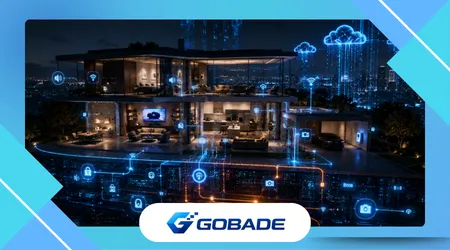
One of the most useful observations from long-term smart-home usage is surprisingly simple: many devices function perfectly well with fewer permissions and less connectivity than manufacturers encourage.
Smart plugs often need internet access for remote control but not continuous location tracking. Smart televisions require network connectivity for streaming yet rarely need unrestricted access to every optional analytics feature. Many connected appliances continue performing core tasks even when advanced data-sharing options are disabled.
Users frequently assume every privacy-related toggle will break functionality. In practice, that rarely happens.
The better approach is selective reduction. Disable features individually, observe behavior for a few days, and restore only what genuinely improves daily use. This process reveals which permissions are essential and which merely support secondary features that provide limited value.
The outcome is often surprising. Many households discover they can reduce data collection substantially while retaining nearly all practical benefits.
Privacy Tools That Actually Help in Everyday Use
Privacy protection does not always require expensive hardware or advanced technical knowledge. Several approaches consistently provide meaningful benefits when used appropriately.
| Approach | Primary Purpose | Best For | Main Strength | Limitation |
|---|---|---|---|---|
| Router-Level Device Monitoring | Track network activity | Families with many devices | Centralized visibility | Requires initial setup |
| Password Managers | Secure account credentials | All connected households | Stronger account security | Learning curve for some users |
| Multi-Factor Authentication | Prevent unauthorized access | Camera and cloud-service users | Blocks many account compromises | Adds login steps |
| Guest Wi-Fi Networks | Separate smart devices from personal devices | Homes with numerous IoT devices | Reduces exposure | Not supported by every router |
| Privacy-Focused DNS Services | Improve network privacy and filtering | Intermediate users | Additional visibility controls | Configuration varies by router |
Password managers deserve particular attention because account compromise remains one of the most common pathways into connected ecosystems. Smart-home devices are frequently linked to cloud accounts, making credential security more important than device security alone.
Guest Wi-Fi networks also provide practical value. Separating smart devices from computers, phones, and sensitive work equipment creates a useful layer of containment without requiring complex networking expertise.
For readers interested in understanding how connected devices communicate across networks and why segmentation matters, the networking documentation from Cisco Networking Academy provides clear explanations of device communication, network structure, and security fundamentals.
A Typical Household Privacy Audit in Practice
Imagine a household containing two smart televisions, three voice assistants, four security cameras, several smart plugs, a connected thermostat, and multiple smartphones.
At first glance, everything appears secure. Devices work correctly. Streaming functions normally. Notifications arrive on time.
The audit begins by reviewing connected-device lists within the router interface. Immediately, two unfamiliar entries appear. They turn out to be devices installed years earlier and largely forgotten.
Next comes account review. One camera platform still includes access permissions granted to a former house sitter. Another service stores voice recordings dating back several years.
Permission settings reveal additional surprises. Several applications maintain location access continuously despite rarely requiring it. A smart television sends extensive viewing analytics that can be disabled without affecting streaming functionality.
After roughly one hour, the household has not purchased anything, installed complicated software, or disconnected useful technology. Yet data exposure decreases noticeably through account cleanup, permission review, and access management alone.
This illustrates an important reality: meaningful privacy improvements often come from organization rather than new products.
The Marketing Narrative Versus Everyday Reality
Technology marketing frequently presents privacy as either fully protected or dangerously compromised. Real-world experiences are usually less dramatic.
A device can be reasonably secure while still collecting more information than necessary. A manufacturer can maintain strong security practices while retaining extensive behavioral analytics. A cloud platform can encrypt stored data while still gathering usage metrics.
Privacy exists on a spectrum rather than as a binary state.
This distinction matters because many consumers chase unrealistic outcomes. Complete privacy is difficult within heavily connected environments. At the same time, meaningful risk reduction remains entirely achievable.
The most effective improvements tend to be incremental: stronger authentication, fewer unnecessary permissions, regular software updates, periodic account reviews, and greater awareness of data-sharing settings.
None of these measures eliminate risk completely. Together, however, they dramatically reduce unnecessary exposure.
Trust Signals Experienced Users Look For
After spending time with multiple smart-home ecosystems, certain trust indicators become increasingly important.
Transparent privacy documentation is one. Companies that clearly explain what data they collect, why they collect it, and how long they retain it generally inspire greater confidence than those relying on vague language.
Regular security updates matter as well. Products receiving consistent maintenance often remain safer over the long term than devices abandoned shortly after release.
Control is another critical factor. Users should be able to review stored data, delete histories, revoke permissions, and manage connected accounts without navigating confusing interfaces.
Perhaps the strongest signal is simplicity. When a company makes privacy settings easy to find and understand, it usually indicates privacy has been considered as part of product design rather than treated as an afterthought.
Consumers often focus heavily on hardware specifications while overlooking these operational characteristics. Yet long-term privacy experiences are frequently shaped more by account management and software support than by device specifications alone.
Realistic Expectations for Smart Home Privacy
Some privacy recommendations create unrealistic expectations. Disabling one setting will not suddenly make a household anonymous. Purchasing a premium router will not automatically secure every connected device. Installing a privacy-focused application cannot compensate for weak passwords or neglected software updates.
Likewise, not every privacy concern justifies drastic action.
Many users benefit more from reducing excessive data collection than from attempting to eliminate connectivity altogether. Smart-home technology exists because it provides convenience, accessibility, automation, and efficiency. The goal is informed use, not complete avoidance.
There is also a point of diminishing returns. After major vulnerabilities are addressed, additional optimizations often produce progressively smaller privacy gains. Chasing perfection can become frustrating and time-consuming.
The most sustainable strategy combines awareness with practicality. Focus first on the changes that meaningfully reduce exposure while preserving the benefits that made the devices worthwhile in the first place.
Conclusion
Connected devices have quietly transformed everyday living. They simplify routine tasks, improve accessibility, automate household management, and provide conveniences that would have seemed futuristic only a decade ago. At the same time, they generate extensive streams of personal information that many users never actively evaluate.
The most significant smart home privacy risks rarely emerge from dramatic cyberattacks alone. More often, they develop through accumulated permissions, forgotten accounts, excessive data retention, and default settings that remain untouched for years.
Small behavioral adjustments consistently produce meaningful results. Reviewing permissions, removing obsolete access, enabling multi-factor authentication, updating firmware, and separating devices onto appropriate networks can significantly improve privacy without sacrificing convenience.
Effective privacy management is less about paranoia and more about visibility. People make better decisions when they understand which devices collect information, where that information travels, and what practical control options exist.
Smart homes do not have to become privacy liabilities. With informed choices, realistic expectations, and periodic review, connected technology can remain useful, efficient, and considerably more respectful of personal information than many households realize today.