

On-device AI privacy has become a defining topic in modern technology policy debates. This article analyzes how local intelligence reduces data exposure while reshaping consumer trust expectations.
Smartphones, wearables, and personal computers increasingly process information locally instead of remotely. This shift changes how companies collect, analyze, and monetize user behavior across digital ecosystems.
On-device processing moves sensitive data away from centralized servers controlled by third parties. That architectural change directly limits mass data aggregation and large-scale breach risks.
This article examines technical mechanisms, privacy implications, and economic tradeoffs behind on-device intelligence. It focuses on real deployment patterns rather than speculative future promises.
The analysis also evaluates regulatory alignment and market incentives shaping adoption. These forces increasingly reward architectures minimizing unnecessary personal data transmission.
Finally, the article assesses limitations and emerging challenges surrounding local computation. Balanced scrutiny ensures realistic expectations about privacy gains and remaining vulnerabilities.
The Core Principles Behind On-Device Artificial Intelligence
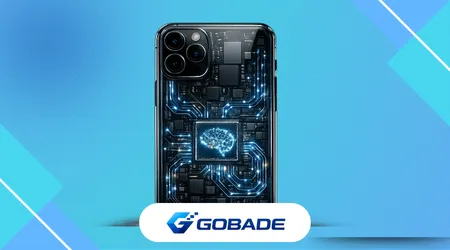
On-device artificial intelligence executes algorithms directly within personal hardware environments. Models analyze data without exporting raw information to external cloud infrastructures.
Local execution relies on optimized neural networks designed for constrained computing resources. Advances in silicon acceleration make such processing commercially viable.
Dedicated processors like neural processing units enable efficient inference workloads. These components reduce latency while conserving battery life during continuous analysis.
Data minimization represents a foundational privacy principle embedded within on-device architectures. Only derived insights leave the device, when necessary.
This approach contrasts sharply with legacy cloud-dependent machine learning pipelines. Centralized models historically required full data replication across networks.
On-device systems also reduce dependency on persistent internet connectivity. Offline functionality expands usability while simultaneously improving privacy outcomes.
Manufacturers increasingly market privacy as a product differentiator across consumer segments. On-device intelligence supports these claims with tangible architectural evidence.
Software frameworks now prioritize edge optimization during development lifecycles. Engineers design models specifically for local inference constraints.
Together, these principles redefine acceptable norms for consumer data handling. Privacy becomes an operational feature rather than a compliance afterthought.
++How Energy-Efficient Technology Is Extending Battery Life Across Devices
How Local Processing Limits Data Exposure Risks
Local processing sharply reduces the volume of personal information transmitted externally. Less transmission directly lowers interception and misuse opportunities.
When data never leaves the device, attack surfaces shrink dramatically. Hackers cannot exploit centralized databases they cannot access.
Biometric authentication offers a clear example of localized privacy benefits. Facial recognition increasingly occurs entirely within personal hardware boundaries.
Companies like Apple publicly emphasize this approach within security documentation. Their strategy aligns with guidance published by the National Institute of Standards and Technology.
On-device speech recognition similarly avoids storing voice recordings remotely. Users gain functionality without surrendering permanent audio archives.
Health monitoring applications benefit significantly from localized analytics. Sensitive biometric trends remain isolated from third-party analytics vendors.
Reduced data sharing also limits cross-platform behavioral profiling practices. Advertisers receive fewer raw signals for intrusive targeting.
This shift challenges established surveillance-based monetization models. Businesses must adapt revenue strategies accordingly.
Ultimately, limiting exposure strengthens user confidence in digital services. Trust becomes a competitive advantage reinforced by architectural decisions.
Privacy Improvements Across Consumer Technologies
Smartphones represent the most visible beneficiaries of on-device intelligence adoption. Predictive text, photo classification, and app recommendations increasingly operate locally.
Wearable devices leverage local analytics to process health metrics continuously. Data aggregation remains confined to personal ecosystems by default.
Smart home devices also adopt partial on-device processing models. Voice assistants now trigger commands locally before cloud escalation.
This architectural change aligns with recommendations from the Electronic Frontier Foundation. Their research advocates minimizing unnecessary data transfers.
Automotive systems increasingly process driver behavior within vehicle hardware. Local analysis improves safety without transmitting sensitive movement data.
Enterprise devices similarly benefit from reduced data leakage risks. Corporate compliance improves when endpoints retain control over proprietary information.
Education technology platforms deploy on-device personalization for younger users. This approach reduces exposure risks for minors.
Across sectors, consumer expectations now favor privacy-preserving designs. On-device intelligence responds directly to that demand.
The result is a gradual normalization of privacy-centric computing experiences. Users increasingly notice when products violate these emerging standards.
Technical Tradeoffs and Performance Constraints
On-device AI introduces performance limitations compared to cloud-scale computation. Hardware constraints restrict model size and complexity.
Engineers must balance accuracy against resource consumption carefully. Optimization techniques like quantization address these challenges.
Battery efficiency remains a persistent concern for continuous inference workloads. Excessive processing can degrade user experience quickly.
Storage limitations also constrain local model deployment strategies. Devices cannot host unlimited specialized algorithms simultaneously.
Despite improvements, some tasks still require cloud augmentation. Hybrid architectures remain common for complex workloads.
Below is a comparison highlighting key tradeoffs between on-device and cloud-based processing:
| Aspect | On-Device AI | Cloud-Based AI |
|---|---|---|
| Data Exposure | Minimal | Extensive |
| Latency | Very Low | Variable |
| Model Complexity | Limited | High |
| Connectivity Dependence | None | Required |
Manufacturers carefully choose workloads suited for local execution. Strategic partitioning maximizes both privacy and performance.
Hardware innovation continues addressing these tradeoffs incrementally. Specialized chips steadily expand feasible local capabilities.
Regulatory Pressure and Market Incentives
Regulatory frameworks increasingly favor data minimization architectures globally. Laws emphasize proportionality and necessity in data processing.
On-device AI aligns naturally with principles embedded within privacy legislation. Processing locally reduces regulatory compliance burdens significantly.
The European Union’s GDPR incentivizes reduced data transfer practices. On-device systems simplify lawful processing justifications.
Market forces amplify regulatory pressure through consumer choice. Privacy-conscious buyers reward transparent architectural decisions.
Technology companies increasingly advertise local processing in marketing campaigns. Privacy messaging becomes a differentiating brand asset.
Regulators also scrutinize cloud data flows more aggressively. Local processing reduces audit complexity and enforcement exposure.
Enterprise procurement policies increasingly mandate privacy-by-design solutions. Vendors adopting on-device AI gain competitive access advantages.
Investment trends reflect these shifting priorities across technology sectors. Capital flows favor architectures resilient to regulatory tightening.
Together, regulation and markets reinforce momentum toward localized intelligence. Structural incentives increasingly discourage unnecessary data centralization.
++Why Digital Identity Systems Are Replacing Passwords Worldwide
Limitations, Risks, and Future Outlook
On-device AI does not eliminate all privacy risks entirely. Malicious applications can still misuse locally stored data.
Device compromise remains a persistent threat vector. Physical access or malware can undermine local protections.
Model updates pose additional risks if poorly managed. Secure update channels remain essential for integrity preservation.
Transparency challenges also persist for proprietary on-device models. Users cannot always verify internal data handling practices.
Interoperability across ecosystems complicates privacy guarantees. Data may still flow between devices under certain conditions.
Future advances will likely expand local model sophistication significantly. Edge computing capabilities continue evolving rapidly.
Federated learning represents one promising complementary approach. Models improve collaboratively without sharing raw data.
User education remains critical alongside architectural improvements. Privacy depends on informed behavior as well as technology.
On-device AI marks meaningful progress, not a final solution. Continuous governance and innovation remain necessary.
++How Edge Computing Is Reducing App Latency in Real Time
Conclusion
On-device artificial intelligence fundamentally reshapes how personal data circulates. Local execution limits exposure by design rather than policy alone.
This architectural shift responds directly to growing privacy expectations. Users increasingly demand tangible protections, not abstract assurances.
Reduced data sharing also improves system resilience against breaches. Decentralization weakens incentives for mass exploitation.
Performance tradeoffs remain but continue narrowing through hardware advances. Specialized chips steadily expand local processing capacity.
Regulatory alignment further accelerates adoption across industries. Compliance becomes simpler when less data travels externally.
Market dynamics reward companies demonstrating credible privacy leadership. Architecture now influences brand trust directly.
Despite benefits, on-device AI requires careful implementation oversight. Security failures can still compromise sensitive information.
Hybrid models will persist where complexity demands cloud augmentation. Balance remains essential for optimal outcomes.
Future innovation should prioritize transparency alongside technical capability. Trust grows when users understand system behavior.
Ultimately, on-device intelligence represents a pragmatic step toward sustainable privacy. Its success depends on continued accountability and responsible deployment.
FAQ
1. What is on-device AI?
On-device AI processes data locally within hardware, avoiding unnecessary transmission to external servers.
2. How does on-device AI improve privacy?
It minimizes data sharing by keeping sensitive information confined to personal devices.
3. Does on-device AI eliminate cloud usage entirely?
No, complex tasks may still rely on hybrid cloud-assisted architectures.
4. Are on-device models less accurate than cloud models?
They can be, but optimization techniques significantly reduce performance gaps.
5. What devices commonly use on-device AI?
Smartphones, wearables, vehicles, and smart home products widely deploy local intelligence.
6. How does regulation influence on-device AI adoption?
Privacy laws encourage architectures that limit data collection and transmission.
7. Can on-device AI still be hacked?
Yes, compromised devices can still expose data despite local processing.
8. Is on-device AI the future of privacy-focused technology?
It represents a strong foundation but requires complementary safeguards and governance.