
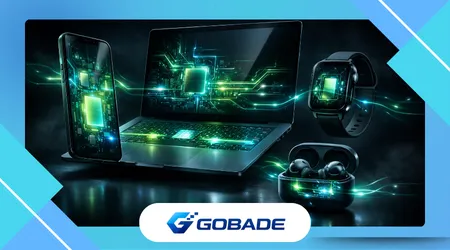
Energy efficient technology now defines how modern devices balance performance, endurance, and sustainability across everyday use. This article analyzes engineering advances, software strategies, and real-world implementations shaping longer battery life across consumer and industrial electronics ecosystems worldwide today.
Battery limitations once dictated device design, forcing compromises between power, portability, and usability for consumers and professionals alike. Advances in materials science, chip architecture, and intelligent power management now reshape those tradeoffs across smartphones, laptops, wearables, and connected devices.
This analysis examines how efficiency gains emerge from hardware-level innovation, operating system optimization, and usage-aware design philosophies. It focuses on measurable impacts, documented deployments, and industry practices rather than speculative future concepts or marketing-driven efficiency claims.
The scope includes mobile devices, computing platforms, and emerging Internet of Things hardware where battery longevity directly affects reliability. Industrial, medical, and consumer contexts appear where efficiency improvements produce operational, economic, or environmental consequences worth documenting.
Rather than isolating batteries as components, this article evaluates energy efficiency as a system-wide discipline. It connects silicon design, software scheduling, display technology, connectivity protocols, and user behavior into a unified efficiency framework.
The goal is to clarify how energy efficient technology tangibly extends battery life today while shaping product expectations tomorrow. Each section provides grounded analysis supported by real deployments, engineering practices, and verified performance outcomes across device categories.
The Shift Toward Energy-Conscious Hardware Design
Energy efficient technology begins at the hardware level, where chipmakers prioritize performance per watt rather than raw computational output. Modern processors integrate heterogeneous cores, allowing lightweight tasks to run efficiently while reserving high-power cores for demanding workloads.
System-on-chip integration reduces energy loss by shortening data pathways between processing, memory, and connectivity components. Fewer discrete parts mean lower electrical resistance, reduced heat generation, and improved overall power stability during continuous device operation.
Advanced semiconductor manufacturing nodes contribute directly to efficiency by shrinking transistor sizes and reducing leakage current. Smaller transistors switch faster with less voltage, enabling higher efficiency without sacrificing responsiveness or computational throughput under normal conditions.
Memory technologies also influence battery endurance through lower refresh rates and intelligent data caching strategies. Low-power DRAM and non-volatile memory reduce background energy consumption during idle states common in mobile and portable devices.
Display components represent another major hardware-driven efficiency gain across consumer electronics markets. OLED and microLED panels selectively illuminate pixels, dramatically reducing power draw during dark-mode interfaces and media consumption scenarios.
Connectivity hardware now includes adaptive radios that scale transmission power based on signal quality and proximity. Wi-Fi, Bluetooth, and cellular modems dynamically adjust energy use, avoiding constant maximum-power transmission previously common in older designs.
Battery chemistry improvements complement efficiency-focused hardware by stabilizing voltage delivery under variable loads. While capacity increases remain incremental, consistent power output allows efficient components to operate within optimal electrical ranges.
Thermal management systems further enhance efficiency by preventing heat-induced energy waste. Vapor chambers, graphite layers, and passive cooling materials maintain performance without energy-intensive active cooling mechanisms.
Collectively, these hardware decisions form the foundation upon which software-driven efficiency strategies can operate effectively. Without energy-conscious physical design, software optimizations alone cannot deliver sustained battery life improvements across modern devices.
++Why Digital Identity Systems Are Replacing Passwords Worldwide
Software Optimization as a Battery Life Multiplier
Operating systems now act as energy managers, continuously balancing performance demands with battery preservation goals. Task scheduling algorithms prioritize efficiency by grouping processes, reducing wake cycles, and minimizing unnecessary background computation.
Modern platforms aggressively limit background activity, allowing applications to execute only during controlled windows. This approach prevents constant sensor polling and network checks that previously drained batteries invisibly throughout daily device usage.
Dynamic voltage and frequency scaling enables processors to adjust power consumption in real time. When workloads decrease, the system lowers clock speeds and voltages, achieving immediate energy savings without perceptible performance degradation.
Machine learning increasingly informs power management decisions by predicting user behavior patterns. Devices anticipate idle periods, charging opportunities, and usage spikes, proactively adjusting power states to extend battery life intelligently.
App developers now receive system-level guidance encouraging energy-efficient coding practices. Platform tools measure power impact during development, helping engineers identify inefficient loops, excessive network calls, or poorly optimized graphics pipelines.
According to research published by the IEEE, software-driven power management can reduce total device energy consumption by over twenty percent in mobile computing scenarios. These gains compound when paired with modern hardware architectures.
Firmware updates also extend battery life long after hardware release through refined power profiles. Manufacturers increasingly deliver efficiency improvements via updates, correcting early inefficiencies discovered through real-world usage telemetry.
Cloud-assisted computation further reduces local processing demands by offloading tasks when network conditions permit. Intelligent delegation between local and remote resources minimizes battery drain during compute-intensive activities like image processing or voice recognition.
Together, software optimizations transform energy efficient technology from static design into an adaptive system. Battery life becomes a dynamic outcome shaped continuously by code quality, operating system intelligence, and user interaction patterns.
Display and Interface Technologies Redefining Power Consumption

Displays remain among the most energy-intensive components in personal devices, making efficiency improvements particularly impactful. Transitioning from LCD to OLED technology allowed pixel-level power control, eliminating constant backlight usage entirely.
User interface design increasingly leverages dark themes, reducing pixel illumination without sacrificing readability. This design shift produces measurable battery savings during prolonged screen-on time common in communication and content consumption tasks.
Adaptive refresh rate technology dynamically adjusts display frequency based on on-screen activity. Static content triggers lower refresh rates, while motion increases frequency temporarily, balancing smoothness and energy efficiency automatically.
Touch and sensor subsystems also contribute to interface-level efficiency improvements. Proximity sensors, ambient light detection, and touch sampling rates now scale dynamically rather than operating continuously at fixed power levels.
Haptic feedback systems evolved toward localized, short-duration actuation rather than prolonged vibration. These refinements deliver tactile response while minimizing unnecessary energy expenditure during frequent user interactions.
Accessibility features now integrate efficiency considerations by reducing redundant visual and auditory feedback. Streamlined cues lower processing demands while maintaining usability for diverse user populations across device categories.
Energy efficient technology in interfaces extends beyond screens into voice-driven interaction models. Voice assistants reduce screen dependency, allowing tasks completion without display activation, significantly lowering power consumption during routine actions.
Research from the International Energy Agency highlights interface efficiency as a critical factor in reducing cumulative energy use across billions of connected devices globally. Small per-device savings translate into massive systemic impact.
By redesigning how users interact with technology, manufacturers achieve efficiency gains without compromising experience. Interface-level innovation demonstrates that battery life improvements often emerge from design philosophy rather than hardware alone.
Connectivity, Networking, and Intelligent Power Scaling
Wireless connectivity once represented a constant energy drain due to persistent signal searching and background synchronization. Modern networking stacks now emphasize opportunistic communication aligned with device power states and usage contexts.
Protocols prioritize burst data transmission over continuous low-level activity. Devices collect updates and transmit them efficiently in scheduled intervals, reducing radio wake time and conserving battery capacity throughout daily operation cycles.
Low-power wide-area networking standards enable connected devices to operate for years on small batteries. These protocols serve sensors, trackers, and smart infrastructure where frequent charging remains impractical or impossible.
The following table summarizes how connectivity optimization affects battery performance across device categories.
| Device Category | Connectivity Strategy | Battery Life Impact |
|---|---|---|
| Smartphones | Adaptive radio scaling | Moderate extension |
| Wearables | Burst synchronization | Significant extension |
| IoT sensors | Low-power protocols | Multi-year operation |
| Laptops | Intelligent Wi-Fi sleep | Noticeable extension |
Location services now rely on hybrid positioning models combining GPS, Wi-Fi, and inertial sensors. Systems select the lowest-energy method capable of meeting accuracy requirements for a given task or application context.
Cloud synchronization platforms increasingly defer non-critical updates until charging or Wi-Fi availability. This prioritization avoids energy-intensive cellular transmissions during low-battery conditions or mobile scenarios.
According to the U.S. Department of Energy, optimized wireless communication reduces energy waste across consumer electronics and industrial systems alike. Connectivity efficiency plays a growing role in national energy consumption strategies.
Security protocols also evolve toward efficiency by minimizing handshake overhead and redundant encryption cycles. Modern authentication balances protection and power consumption without exposing devices to unnecessary energy costs.
As connectivity demands increase, intelligent networking becomes essential to battery longevity. Energy efficient technology ensures always-connected devices remain practical without imposing constant charging burdens on users.
Energy Efficiency Across Device Categories and Use Cases
Smartphones demonstrate efficiency gains through coordinated hardware and software integration. Flagship devices now routinely deliver full-day usage under demanding workloads previously requiring midday recharging.
Laptops benefit from efficiency-focused processors enabling multi-day standby and extended active use. Portable computing increasingly rivals tablets in endurance while maintaining traditional productivity capabilities expected by professionals.
Wearable devices showcase extreme efficiency optimization due to size constraints and continuous operation. Smartwatches and health trackers achieve days or weeks of battery life through minimalist displays and tightly controlled processing cycles.
Tablets balance media consumption and productivity through adaptive performance scaling. Devices reduce power draw during reading or streaming while reserving performance headroom for creative or multitasking scenarios.
Internet of Things deployments highlight efficiency as a functional requirement rather than convenience. Industrial sensors, medical monitors, and environmental trackers depend on long battery life to maintain reliability and reduce maintenance costs.
Automotive electronics incorporate energy efficient technology to preserve vehicle battery systems. Infotainment, navigation, and driver assistance systems now operate with minimal impact on overall vehicle electrical loads.
Enterprise environments increasingly select devices based on energy efficiency metrics. Longer battery life reduces downtime, charging infrastructure requirements, and total cost of ownership across large device fleets.
Educational institutions benefit from extended device endurance supporting full-day learning without charging interruptions. Efficiency improvements directly enhance accessibility and continuity in digital education settings worldwide.
Across categories, efficiency gains translate into practical benefits shaping purchasing decisions. Battery life now functions as a core performance metric rather than a secondary specification.
++How Edge Computing Is Reducing App Latency in Real Time
Sustainability, Economics, and the Broader Impact
Energy efficient technology extends beyond individual convenience into measurable sustainability outcomes. Reduced charging frequency lowers electricity consumption, contributing to broader energy conservation efforts at scale.
Extended battery life also slows battery degradation by reducing charge cycles. This effect lengthens device lifespan and delays battery replacement, decreasing electronic waste generation globally.
Manufacturers increasingly align efficiency improvements with regulatory and environmental standards. Energy labeling and efficiency benchmarks influence design priorities across international markets and compliance frameworks.
Consumers benefit economically through reduced energy costs and fewer accessory purchases. Lower reliance on power banks, chargers, and replacement batteries represents tangible long-term savings.
Supply chains also gain resilience as efficiency reduces demand pressure on raw materials. Slower battery turnover eases extraction requirements for lithium, cobalt, and related resources critical to energy storage technologies.
Enterprise sustainability reporting increasingly includes device energy efficiency metrics. Organizations track battery longevity as part of broader environmental, social, and governance performance indicators.
Energy efficient technology also improves reliability in critical systems. Medical devices, emergency equipment, and infrastructure sensors benefit from predictable, extended operation without frequent human intervention.
Public perception increasingly associates efficiency with quality and innovation. Brands demonstrating measurable battery improvements gain credibility in markets skeptical of incremental feature-driven product cycles.
Ultimately, efficiency represents convergence between technical excellence and responsible design. Battery life extension becomes a visible outcome of engineering discipline rather than a standalone marketing claim.
++Why Technology Is Becoming More User-Friendly
Conclusion
Energy efficient technology fundamentally reshapes how devices manage power across diverse usage scenarios. Battery life improvements now emerge from holistic system design rather than isolated component upgrades.
Hardware innovation establishes the physical foundation for efficiency gains through optimized processors, displays, and connectivity modules. These advancements reduce baseline power consumption before software intervention occurs.
Software intelligence multiplies hardware efficiency by aligning computation with real user behavior. Predictive scheduling, background control, and adaptive scaling convert raw efficiency into practical endurance benefits.
Interface and display evolution demonstrates how design choices influence energy outcomes. Visual efficiency proves that usability and battery conservation can coexist without compromise.
Connectivity optimization addresses one of the most persistent sources of energy drain in modern devices. Intelligent networking ensures constant connectivity remains compatible with long-lasting battery performance.
Across device categories, efficiency improvements translate into reliability, convenience, and economic value. Battery life now directly supports productivity, accessibility, and operational continuity.
Sustainability outcomes further elevate efficiency from technical feature to societal contribution. Reduced energy use and extended device lifespans support global environmental objectives.
Manufacturers increasingly compete on efficiency metrics as consumers demand tangible endurance gains. Battery performance becomes a trust signal reflecting engineering maturity and product integrity.
Future progress will likely refine efficiency through incremental yet compounding improvements. Each optimization contributes to a broader ecosystem where energy use aligns with actual needs.
Energy efficient technology ultimately reframes expectations around mobility and autonomy. Devices last longer, waste less energy, and integrate more seamlessly into daily life without constant charging dependency.
FAQ
1. What defines energy efficient technology in modern devices?
Energy efficient technology refers to hardware and software designs that minimize power consumption while maintaining performance. It focuses on performance per watt, intelligent power management, and system-level optimization rather than raw capacity increases.
2. How does efficiency differ from increasing battery size?
Efficiency reduces energy demand, while larger batteries increase energy supply. Efficiency extends battery life without adding weight, cost, or environmental burden associated with larger energy storage components.
3. Why does software matter so much for battery life?
Software controls when and how hardware operates, directly influencing power use. Efficient scheduling, background limits, and adaptive scaling prevent unnecessary energy consumption during typical usage patterns.
4. Do displays really affect battery life significantly?
Yes, displays often represent the largest single power draw in portable devices. Technologies like OLED and adaptive refresh rates substantially reduce energy use during prolonged screen activity.
5. How does connectivity optimization extend battery life?
Optimized connectivity reduces radio usage through burst transmissions and adaptive power scaling. This minimizes constant background communication that historically drained batteries rapidly.
6. Are efficiency gains noticeable to everyday users?
Users experience efficiency through longer usage time, fewer charging interruptions, and consistent performance. These benefits accumulate across daily routines without requiring behavioral changes.
7. Does energy efficiency improve device longevity?
Yes, fewer charge cycles slow battery degradation, extending usable lifespan. Efficient devices often remain practical longer before requiring battery replacement or device upgrades.
8. Will future devices continue improving battery life through efficiency?
Industry trends strongly indicate continued efficiency-focused innovation. Incremental improvements across hardware, software, and design will likely deliver ongoing battery life gains without radical battery chemistry changes.